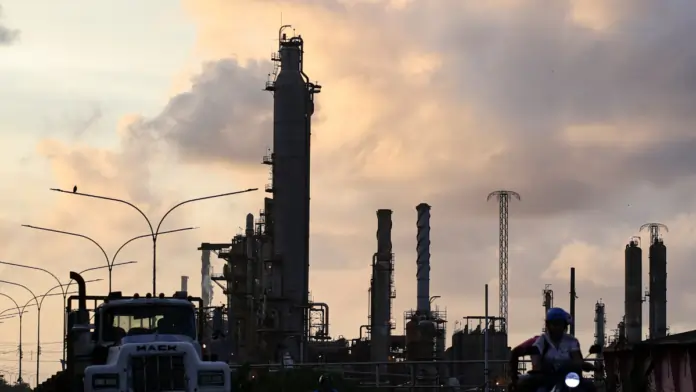
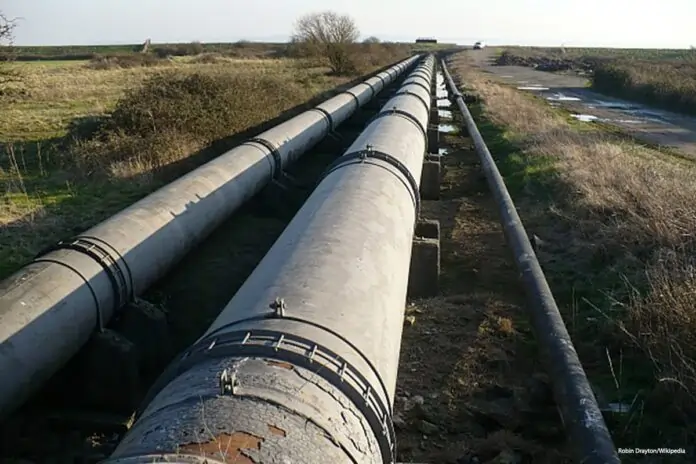
Regulator to hold hearing on March 2 on dollar-based returns, capacity and tariff impact of 256km project.
The Oil and Gas Regulatory Authority (Ogra) has invited expert and public feedback on a proposed $432 million government-to-government oil pipeline project with Azerbaijan, particularly questioning the justification of a four-year payback period and its impact on transportation costs, Dawn reported.
Ogra has scheduled a public hearing for March 2 and asked stakeholders to comment on whether the proposed four-year recovery period is reasonable and whether the project would affect regional transport costs compared to existing road-based movement.
The project involves construction of the Machike-Thallian-Tarujabba white oil pipeline through a joint venture between Azerbaijan’s SOCAR, Frontier Works Organisation (FWO) and Pakistan State Oil. It is being pursued as a government-to-government strategic investment.
The proposal includes a 20-inch, 256km pipeline from Faisalabad to Thallian with an initial capacity of about 7 million tonnes per annum (MTPA), extendable to 10 MTPA. A 12-inch, 172km section would run from Thallian to Tarujabba with a capacity of 5 MTPA, while an 8-inch, 9km line would connect Thallian to Faqirabad.
Section I is estimated at $320 million, Section II at $94 million and Section III at $17.5 million. The project life has been projected at 30 years.
Ogra has also sought comments on the proposed throughput volumes, capacity assumptions for each section and storage facilities planned at 60,000 tonnes each at Faisalabad and Thallian and 50,000 tonnes at Tarujabba.
The Economic Coordination Committee (ECC) had earlier cleared a project cost of $300 million, but two ministries raised concerns about guaranteed dollar-denominated returns. The Ministry of Finance questioned the four-year payback period and proposed extending it to seven years to reduce early-stage tariff impact. It also sought rationalisation of interest rate assumptions and the weighted average cost of capital.
The Power Division cautioned against guaranteed returns in dollar terms, citing past experience with independent power producers.
SOCAR has reportedly proposed a “ship or pay” arrangement under which oil marketing companies would commit minimum annual volumes, with any shortfall covered through the inland freight equalisation mechanism.
The ECC approved the project terms, stating that dollarised returns would apply only if foreign investment materialises, and described the initiative as a strategic opportunity for future investment and bilateral cooperation.
Currently, around 70% of petrol and diesel is transported by road, 28% via pipeline from Karachi to Machike and 2% by rail. Ogra is expected to frame a regulatory mechanism declaring the new pipeline as a default mode of transportation to ensure optimal utilisation.