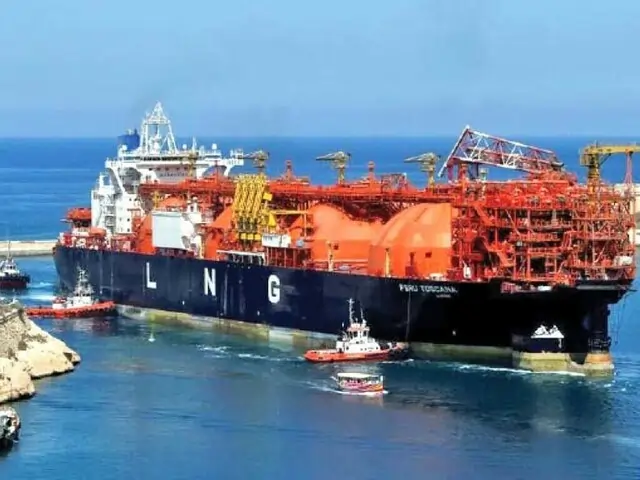
In a deft energy-market manoeuvre, Pakistan has transformed an oversupply of liquefied natural gas (LNG) into a financial triumph, securing an estimated USD 880 million in combined savings and profits through a three-year deal with Italian energy major Eni S.p.A.
Under the arrangement, Pakistan LNG Limited (PLL) will divert 32 LNG cargoes from the domestic grid to the international market between 2025 and 2027, capitalizing on lower local demand and higher global spot prices.
It has been reported that the two transmission companies – Sui Northern Pipelines Ltd and Sui Southern Pipeline Ltd – had been reporting that Pakistan’s gas transmission network had been under pressure, both literally and economically. With line-pack volumes often exceeding 5.2 billion cubic feet (bcf) – a dangerous level for the system – authorities faced the dual challenge of managing excess regasified LNG (RLNG) or facing penalties for violating contractual terms.
Rather than allowing surplus gas to strain infrastructure, Pakistan was able to negotiate a mechanism within its long-term supply contract with Eni for diversion of cargoes outside Pakistan on mutually acceptable terms, leveraging on global market dynamics. The deal’s “mutual diversion” clause enabled both parties to agree on redirecting cargoes abroad and sharing the financial returns from the re-sale.
The negotiations with Eni expertly handled by the leadership at Pakistan LNG Limited (PLL) under the strategic guidance of the Federal Minister for Petroleum Ali Pervaiz Malik and Secretary Momin Agha have locked diversion of ships, according to the schedule. In the current year, 11 Eni cargoes are expected to be diverted and save USD 300 million in import costs and generate USD 45 million in direct profits. In the year 2026, another 11 cargoes will deliver around USD 230 million in savings and USD 45–50 million in profits – totalling roughly USD 245–250 million. In 2027, the final 10 cargoes are forecast to add another USD 290–300 million in financial benefit.
Over the full term, Pakistan stands to gain USD 880–900 million, a rare fiscal boost in an energy sector often beset by price volatility and circular debt.
For years, Pakistan was known primarily as a buyer in global LNG markets, locked into long-term import contracts to meet industrial and power-generation demand. But the landscape has shifted dramatically: high RLNG tariffs have pushed industries to cut consumption from nearly 400 million cubic feet per day (MMcf/d) to just 60–70 MMcf/d. Power producers who were supposed to be the primary consumers of RLNG have sought cheaper fuel sources and have reduced LNG-based generation. Resultantly, a sudden and significant domestic surplus situation emerged. Instead of allowing it to clog the grid or incur losses, PLL’s strategic diversion marks Pakistan’s evolution from a passive importer to a nimble market participant.
Analysts see the Eni diversion deal as an encouraging sign of Pakistan’s emerging commercial sophistication in managing energy flows. For a sector often criticized for reactive policymaking, this move reflects a proactive, data-driven approach.
“This kind of foresight is unusual in Pakistan’s energy management,” said one analyst. “It shows PLL can operate with the flexibility of a trader, not just a state buyer.”
Still, experts caution that the success hinges on maintaining a delicate balance – keeping domestic gas pressures stable while ensuring future LNG demand doesn’t collapse further.
As Pakistan contends with energy affordability and infrastructure stress, the Eni deal provides not only financial breathing room but also a template for adaptive energy governance. Turning surplus into exportable value could help mitigate the chronic fiscal strain of energy imports – provided the government sustains its commitment to commercial discipline and contractual agility. In the global LNG market, where volatility is the only constant, Pakistan’s latest move sends a clear message: even in a crisis of oversupply, there’s room for profit – if you know where to look.
Pakistan is also looking to engage with Qatar for diverting 24 cargoes under the long-term strategic deal. Though a different contract, Pakistan State Oil (PSO) has a contractual mechanism, the net proceeds differential clause that allows it to reduce cargo volumes. However, PSO opted not to exercise this provision for its 2025 cargoes from Qatar. PLL’s successful diversion may just provide an impetus for finding a way for dealing with Qatar.