
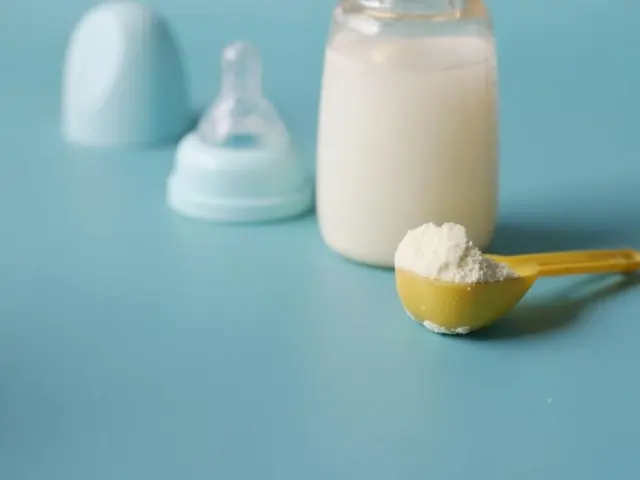
ISLAMABAD: Health experts on Tuesday revealed the health hazards associated with the use of formula milk, saying that Pakistan annually spends USD 889 million on the imports of formula milk.
An awareness session for journalists at the Health Services Academy (HAS) titled ‘The Role of Media in the Promotion, Protection and Support of Breastfeeding’ was organised by UNICEF in collaboration with the Ministry of National Health Services, the Ministry of Planning, Development and Special Initiatives, and other partners. Highlighting the cost-benefit analysis of breastfeeding, the experts pointed out that only 48.4 percent of infants- under six months- are exclusively breastfed in Pakistan, well below the World Health Assembly target of 60 percent by 2030.
This shortfall results in losses of USD 2.8 billion annually due to the negative impact of low breastfeeding rates on public health, according to data from Nutrition International’s Cost of Not Breastfeeding Tool.
As per Nutrition International data in Pakistan, low breastfeeding rates also trigger over 33,700 deaths, 6.6 million child diarrhea cases, and 2.7 million school years lost annually.
Speaking on the occasion, Minister of State for National Health Services and Regulations, Dr Malik Mukhtar Ahmed Bharath, said that ignorance about breastfeeding and basic health facts among parliamentarians and media professionals remains one of the biggest barriers to improving public health and disease prevention in Pakistan.
He said the long-delayed Breast Milk Substitutes (BMS) law at the federal level was not held back by corporate pressure, but a lack of understanding among legislators has been the real issue. “Many lawmakers don’t know the dangers linked with formula feeding or the benefits of breastfeeding,” he remarked.
“Most of our parliamentarians and even senior journalists don’t know that hepatitis B and C are not water-borne diseases. When those shaping public opinion lack such basic knowledge, how can the public be expected to understand breastfeeding, vaccination, or birth spacing?” he questioned.
Dr Mukhtar said breastfeeding remains the simplest and most effective protection against malnutrition and childhood disease, yet it continues to be misunderstood. “Breastfeeding is a natural contraceptive. A woman who breastfeeds exclusively for two years does not conceive during that time, but most women are unaware of this fact,” he said.
He lamented that Pakistan has yet to establish a single Baby Friendly Hospital, a globally recognized standard for maternity facilities that promote breastfeeding. The minister pledged full support for initiatives advancing breastfeeding and health literacy, adding that Islam does not prohibit birth spacing but encourages responsible parenthood and family wellbeing.
UNICEF Representative in Pakistan, Pernille Ironside, said breastfeeding was “the first vaccine, first right and first protection” for every child.
“Yet less than half of Pakistan’s babies under six months are exclusively breastfed, which is well below the global target of 60 percent. This gap leads to thousands of preventable child deaths every year,” she said.
She noted that breastfeeding is also an economic and gender-equality issue. “For every dollar invested in breastfeeding, there’s a return of 35 dollars. It saves lives, reduces healthcare costs, and builds the nation’s future workforce,” she added, urging the media to normalize breastfeeding, challenge stigma, and report responsibly on maternal and child health.
UNICEF Nutrition Chief Anteneh Girma Minas highlighted that “about 54 percent of children in Pakistan, over half, are at risk of poor developmental outcomes due to inadequate nutrition. Pakistan faces a triple burden of malnutrition—stunting, wasting, and obesity that costs an estimated 3 percent of GDP each year and contributes to nearly half of all child deaths.”
“Effective interventions exist, and breastfeeding remains one of the most impactful public-health measures,” he said.
According to data shared at the session and the Statista Market Forecast, formula milk sales reached USD 435 million, around Rs 124 billion by September 2025, most of it imported, creating a financial strain on families and a serious blow to the national economy.
The session underscored the critical role of media in shaping public understanding, countering harmful myths and exposing unethical marketing of breast-milk substitutes that erode mothers’ confidence and endanger infant health.
Fahmida Khan, UNICEF Gender and Development Specialist, stressed the need for gender-responsive workplace policies and day-care facilities to help working mothers continue breastfeeding.
A panel discussion followed, featuring Dr Irfanullah of Nutrition International, Dr Nazeer Ahmed, Chief Nutrition at the Ministry of Planning, Munawar Hussain of Global Health Advocacy Incubator, UNICEF’s Fahmida Iqbal, and senior journalist Nadeem Chaudhry.
The panelists discussed the media’s role in addressing misconceptions, highlighting enforcement gaps, and promoting family-friendly workplaces.
Senior nutrition expert Dr Irshad Danish and UNICEF Nutrition Officer Muhammad Salman said the media’s influence can reshape social behaviour and policy.
“When journalists report evidence-based stories on breastfeeding, they counter misinformation and build public trust. The media can play a decisive role in transforming social norms and protecting mothers from commercial manipulation,” they said.
Participants adopted a joint media statement committing to promote evidence-based reporting, gender-responsive advocacy, and stronger accountability for policies that support mothers to breastfeed.
More than 40 journalists from major print, electronic, and digital outlets attended the event, which concluded with a joint declaration committing media professionals to promote breastfeeding and counter misleading marketing of formula milk. ABDUL RASHEED AZAD